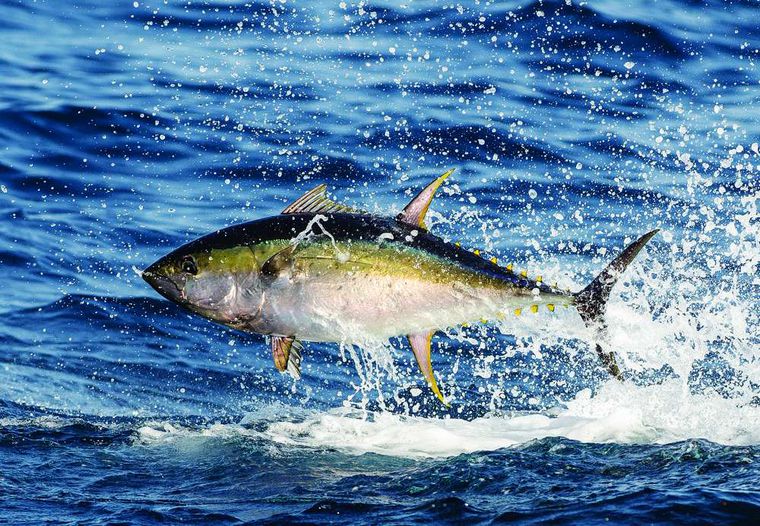
LA JOLLA, CA, USA, August 5, 2019 /EINPresswire.com/ — Marine Protected Areas (MPAs) have proven themselves as successful strategies to protect spawning habitat and nurseries for nearshore fish populations. However, it has been a harder case to make that MPAs protect highly migratory and highly valuable pelagic species such as tuna, as those species spawn in the open ocean. The Republic of Kiribati, an island nation in the Pacific, has now contributed to the understanding that pelagic species can indeed reap the benefits of MPAs, thanks to a recent study published in Scientific Reports that looked at tuna spawning around the nation’s Phoenix Island Protected Area (PIPA). The report, a major collaborative effort by Massachusetts Institute of Technology (MIT), Sea Education Association (SEA), Woods Hole Oceanographic Institute (WHOI), and Boston University (BU) shows conclusively that skipjack, yellowtail, and bigeye tuna spawned within the borders of the Phoenix Island MPA consistently over the three-year study period, even during changing weather and ocean current conditions.