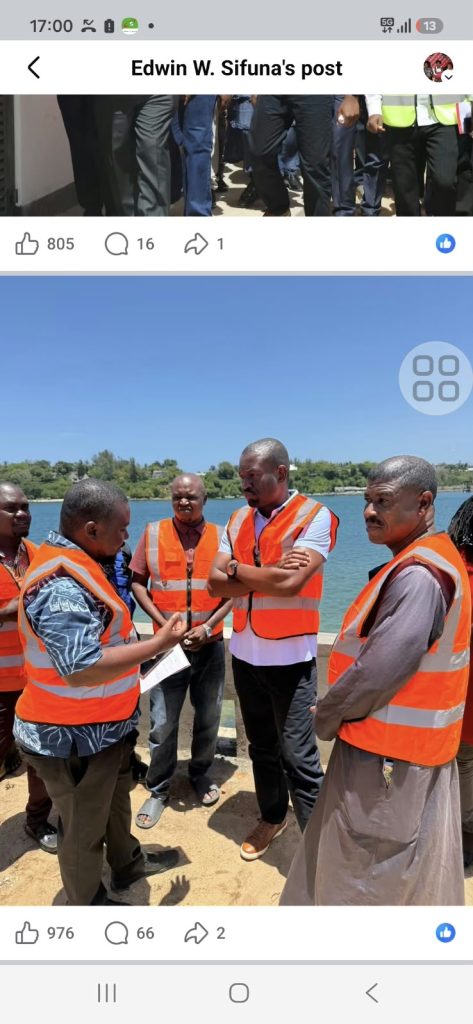
On 22 September, our Mombasa team participated in the Senate Mashinani Programme in Kilifi County, with the stakeholder engagement held at Kilifi Central Beach Management Unit (BMU). The engagement provided an important platform for dialogue between national and county decision-makers and communities whose livelihoods depend on fisheries.
The engagement brought together Senators, Kilifi County officials, Beach Management Units, small-scale fishers, fish traders and women’s groups to discuss issues affecting fishing communities, the sustainability of fisheries investments and the effective management of community facilities.The Standing Committee on Land, Environment and Natural Resources, chaired by Sen. Mohamed Faki, the Standing Committee on Agriculture, Livestock and Fisheries, chaired by Sen. Wafula Wakoli and the Standing Committee on Energy, chaired by Sen. William Kisang, conducted a joint oversight visit to the Kilifi Central Fish Landing Site. The visit provided an opportunity for the Committees to engage directly with stakeholders and better understand the issues affecting the facility and the wider fishing community.
Representatives of fishing communities highlighted key challenges affecting their livelihoods, including concerns about the welfare of small-scale fishers, lack of tenure security for fish landing sites, and restricted access to some sites due to encroachment by private developers. Secure and accessible fish landing sites are essential to the operations and livelihoods of small-scale fishing communities, making the protection of these spaces an important concern for coastal communities.
In response to the concerns raised, the Senate Committee on Land and Natural Resources directed the Kilifi County Department responsible for lands to provide a list of landing sites affected by encroachment or land grabbing for further follow-up at the Senate level.The engagement provided an important opportunity to raise their concerns directly with decision-makers, establish channels for continued engagement and strengthen advocacy around secure access to fish landing sites and the protection of community fishing spaces. Continued dialogue between communities, county and national government institutions is essential to ensuring that concerns affecting fishing communities are documented, followed up and considered in decision-making processes.
Community voices matter. Meaningful participation must translate into action and accountability.